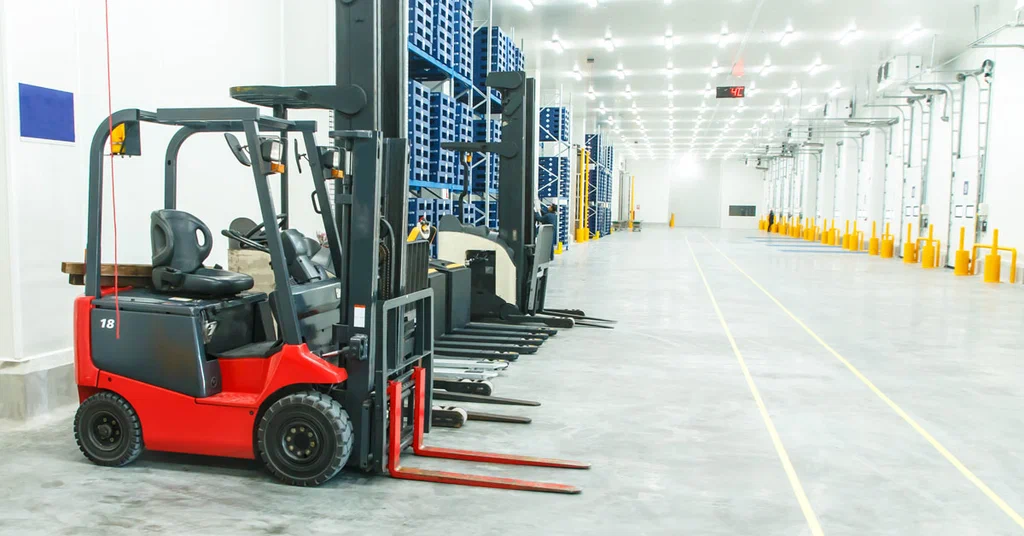
What Are Forklifts?
Warehouses in different industries heavily rely on forklift types,they are essential for lifting, moving, or transporting heavy loads. Forklifts are essential to business operations, productivity enhancement, and throughout the use of machinery in construction and agriculture. Recognizing the significance of forklifts in a company’s activities is also fundamental.
Each type of forklift has distinct features; therefore, differentiating and identifying the best standards for your site is critical if hazardous manual material handling is to be avoided. In this article, I will explain what I deem the simplest forklifts types: the which includes manual forklifts, electric forklifts, telehandler forklifts, and telescopic forklifts. Their benefits, characteristics, and purposes will also accompany them. By the end of this article, you will be knowledgeable enough to determine which forklift types will best suit the warehouse or job site.
Understanding Forklift Types: A Quick Overview
There are various forklift types, each designed to serve specific purposes based on the working environment. Below, we’ll cover four primary forklift types:
- Manual Forklifts
- Electric Forklifts
- Telehandler Forklifts
- Telescopic Forklifts
Each forklift type serves a different purpose and is tailored to specific tasks. Understanding these differences is crucial when choosing the most suitable one for your operational needs.
Manual Forklifts: When to Use Them in Your Warehouse
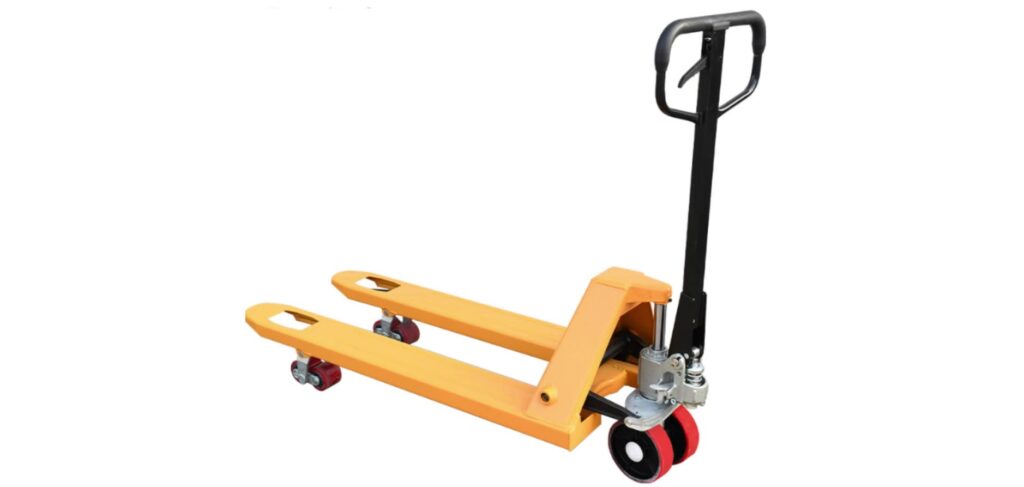
As well known as hand pallet jacks or even pump trucks, these manual forklifts are a more simpler and for that reason, cheaper counterpart of the traditional forklift. Such forklift types are primarily used by smaller stores alongside warehouses as they do not regularly have to lift heavy materials. These forklifts enable people to pick up a pallet and other lightweight loads and transport them over short distances within a small and confined workspace. They do not require any specialized training but rather need physical power and are efficient at basic material handling in less intensive workplaces.
Benefits of Manual Forklifts:
- Affordability: The most notable aspect of the manual forklifts is their low cost, making them the most affordable type of forklift in the market. This is particularly useful to those businesses that are operating on a budget.
- Simplicity: A manual forklift is easy to operate. Because they are straightforward, a new operator does not need any extensive training on how to use it. This is great for small businesses that would consider using electric or telehandler forklifts as too complex for their needs
- Low Maintenance: Manual forklifts are not powered by an engine or motor which makes them even easier to maintain than electric gas fuel ones. The only routine maintenance that has to be done is checking the wheels and forks from time to time.
- Space-Saving: These forklift types are compact, making them ideal for small warehouses or spaces with limited storage or narrow aisles.
Limitations:
- Limited Load Capacity: Manual forklifts are only capable of lifting smaller loads, typically up to 5,000 lbs, so they’re not suitable for heavy-duty tasks.
- No Reach: These forklifts don’t offer any vertical reach, which makes them ineffective for lifting items to higher shelves or pallets stacked high.
- Manual Effort: Since these forklifts require manual effort to move, they can be labor-intensive and not ideal for environments with large-scale material handling needs.
If your warehouse or job site has low-volume tasks and doesn’t require high lifting or heavy loads, manual forklifts are the most cost-effective and practical choice.
Electric Forklifts: The Sustainable Choice for Modern Warehouses
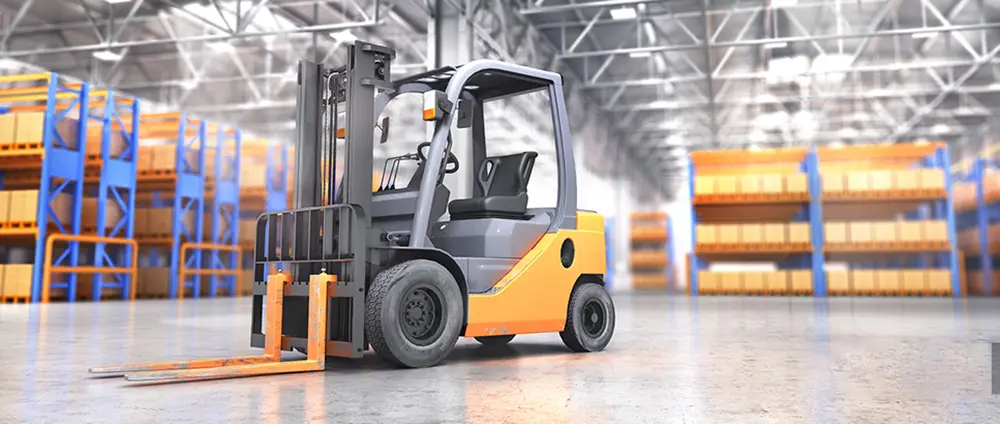
To support sustainability, gas powered forklifts have been replaced with electric motor ones which use a rechargeable battery. For instance, electric motors have a lower cost for indoor warehouses that have a high lifting component. Their lower operating costs, along with lower maintenance costs, increases the cost effectiveness for electric forklifts and explains their increased use in contemporary warehouses.
Benefits of Electric Forklifts:
- Environmentally Friendly: Electric forklifts are a great option for warehouses with enclosed spaces that require air quality regulations since they produce no exhaust fumes.
- Quiet Operation: Electric forklifts are more suitable than gas-powered forklifts because of how quiet they are. This reduces noise pollution around the warehouse which is desirable in noise-sensitive areas.
- Cost-Efficiency: Though the upfront cost may be higher, electric forklifts, in the long run, will save money due to lower operating and maintenance costs. There are also no costs for fuel, making them extremely economically friendly.
- High Load Capacity: These forklifts are designed for heavy-duty tasks and can handle loads of up to 5,000 lbs or more. They are capable of operating efficiently across large warehouses.
- Reduced Maintenance: Electric forklifts have fewer moving parts than gas-powered forklifts, which means fewer breakdowns and reduced maintenance time.
Limitations:
- Upfront Cost: Electric forklifts tend to be more expensive upfront, especially when you factor in the cost of batteries and charging stations.
- Battery Life: The limited battery life can be a constraint, as you’ll need to periodically recharge them to keep them operational. However, charging stations and battery management systems can help mitigate this issue.
- Charging Time: Depending on the battery capacity, charging can take several hours, which could disrupt your operation if you don’t have a backup forklift or sufficient downtime for recharging.
For businesses looking for an efficient, cost-effective, and environmentally friendly forklift type, electric forklifts are the clear winner.
Telehandler Forklifts: Versatility for Tough Job Sites
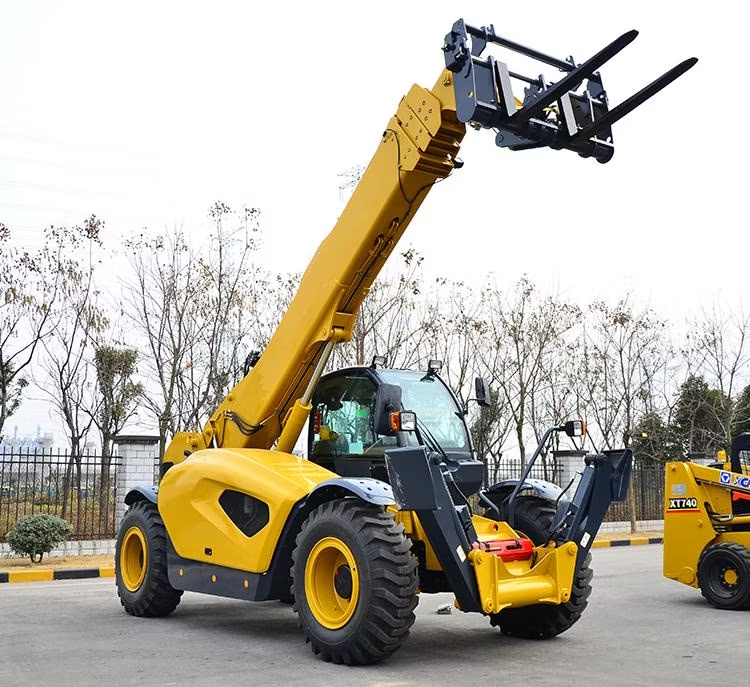
Telehandler forklifts, or telescopic handlers, are one of the types of versatile forks in the industry. They are mostly used in construction, farming, and various outdoor works. If you work at a height, the telescoping booms on these machines allow you to work around obstacles. Telehandler forklifts are efficient and important for vertical material handling or relocation of materials over rough surfaces.
Benefits of Telehandler Forklifts:
- Extended Reach: The key feature of telehandler forklifts is their telescoping boom, which gives them a greater reach compared to traditional forklifts. This feature is invaluable in construction sites and agricultural fields.
- Multifunctional: Telehandler forklifts can be equipped with various attachments such as forks, buckets, and lifting hooks. This makes them ideal for a variety of lifting tasks, from lifting pallets to moving gravel or even digging.
- Rough Terrain Capability: Unlike traditional forklift types, telehandler forklifts are designed to operate on rough, uneven terrain, making them perfect for construction sites or farmyards.
- Heavy Lifting: These forklifts are designed to handle heavy loads, often lifting materials that weigh several tons.
Limitations:
- Size: Due to their extended boom and larger body, telehandler forklifts are not as compact as other forklift types, which makes them harder to maneuver in tight spaces.
- Training Required: Operating a telehandler forklift requires specialized training, as the extended boom and heavier loads can lead to accidents if not used properly.
- Maintenance Costs: Telehandler forklifts are more complex and may incur higher maintenance costs compared to simpler forklift types.
If your job site involves outdoor work, lifting heavy loads at height, or navigating rough terrain, a telehandler forklift is the ideal choice for the task.
Telescopic Forklifts: Power and Reach for Challenging Environments
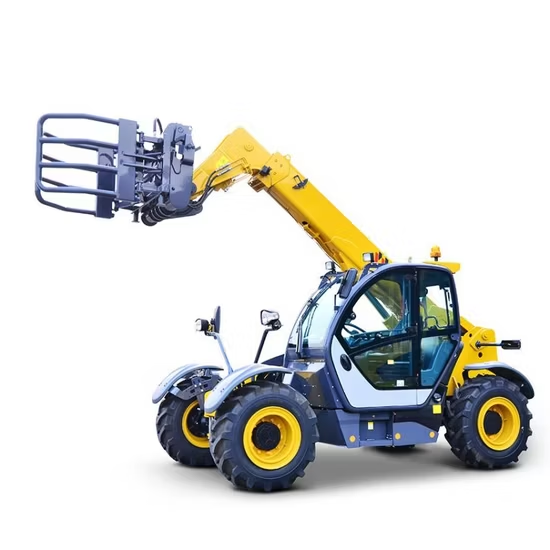
Telescopic forklifts are a more advanced version of telehandler forklifts, offering even greater lifting capacity and reach. These machines handle heavy-duty tasks and are commonly used in industries like construction, agriculture, and mining.
Benefits of Telescopic Forklifts:
- Extended Reach: The boom on a telescopic forklift extends further than that of a standard telehandler forklift, allowing it to reach greater heights and access difficult-to-reach areas.
- Heavy Duty: Telescopic forklifts are built for handling extremely heavy loads and are ideal for large-scale projects that require lifting substantial materials.
- Multiple Attachments: These forklift types are compatible with a variety of attachments, such as lifting hooks, grapple buckets, and other specialized tools, making them adaptable for various tasks.
Limitations:
- Large Size: Telescopic forklifts are large and can be difficult to maneuver in tight spaces or narrow aisles.
- Complex Operation: These forklift types require advanced operator skills, as they involve more complex handling of extended booms and heavy loads.
For industries requiring maximum lifting power and reach, telescopic forklifts are the perfect solution.
Choosing the Right Forklift for Your Warehouse: Factors to Consider
Choosing the right forklift type involves evaluating various factors to ensure it meets your operational requirements. Some of the key factors to consider include:
- Warehouse Size and Layout: Larger warehouses might require electric forklifts or Toyota forklifts, while smaller spaces may benefit from manual forklifts.
- Terrain: For construction or agricultural sites, telehandler forklifts and telescopic forklifts are designed to handle rough terrains.
- Load Capacity: Assess the maximum weight of materials to be lifted. Electric forklifts or telehandler forklifts are ideal for handling larger loads.
- Safety Requirements: Choose a forklift type that provides the necessary safety features to protect workers during operation. Some forklift types come with advanced safety systems, such as stability control and automatic brakes.
Where to Get Forklift Services: Trustworthy Options for Your Business
The hardest part when it comes to purchasing, servicing, or maintaining a forklift is finding a dependable partner with good customer support. That’s why we are here. At Qimamaffan Forklifts, we have a wide selection of electric forklifts, manual forklifts, telehandler forklifts, and telescopic forklifts available for purchase depending on what you need for your warehouse or job site. We provide much more than just forklifts; in addition, we do repair & maintenance, service contracts, supply spare parts, offer consultancy and training because we want your equipment working for you and your people prepared to work. From the supply of new forklifts and maintenance services to long-term business support, our clients never need to worry because we have everything they need under one roof so they always can manage their business effectively. So why don’t you contact us today and we will show you how our sophisticated forklift systems can boost your company’s productivity tomorrow.
Conclusion
Selecting the appropriate forklift types is imperative to streamline your operations, build safety and ensure everything in the business is running smoothly. Each forklift has its own merits, ranging from manual forklifts for light duty tasks to electric forklifts suitable for heavy lifting in enclosed spaces. Toyota forklifts are trusted and efficient, while telehandler forklifts and telescopic forklifts have outstanding versatility along with reach for construction and outdoor sites. Factors like size and capacity of the warehouse, terrain and safety issues helps you make the right choice of forklift types for your operational needs. For those uncertain about which forklift type they need, Qimamaffan Forklifts is the appropriate place to consider as they offer advice from experts along with many forklift options for achieving the desired productivity
3 comments
[…] health care for your machines—reducing risks while maximizing efficiency and usefulness. Forklifts that are not maintained regularly are more likely to experience failure. An unexpected hydraulic […]
[…] forklift driver is someone who primarily drives a forklift to transport goods within a specified location, such as a warehouse, construction site, or […]
[…] help as it provides a complete resource of information about forklift trucks, such as the different types of forklifts, how to maintain them and what are some of the options forklift rentals available […]