When deciding on equipment for your warehouse, construction sites, or industrial sized projects, picking a material handling device is arguably one of the first choices to consider. Each type of equipment has its own specialized prerequisite and choosing incorrectly can have severe consequences spanning from loss in profitability due to inefficient use of time to loss in productivity and consistently present safety issues for your workspace.
With respect to loading and unloading, both telehandler forklifts and traditional forklifts are equally popular. They seem identical in purpose, but great differences lie in their design, capability, and operation that affect your business. This blog will focus on each of these two machines in detail to ensure that businesses located in Saudi Arabia or any other country that values safety and efficiency are able to make the right choice for their rental needs.
What is a Telehandler Forklift?
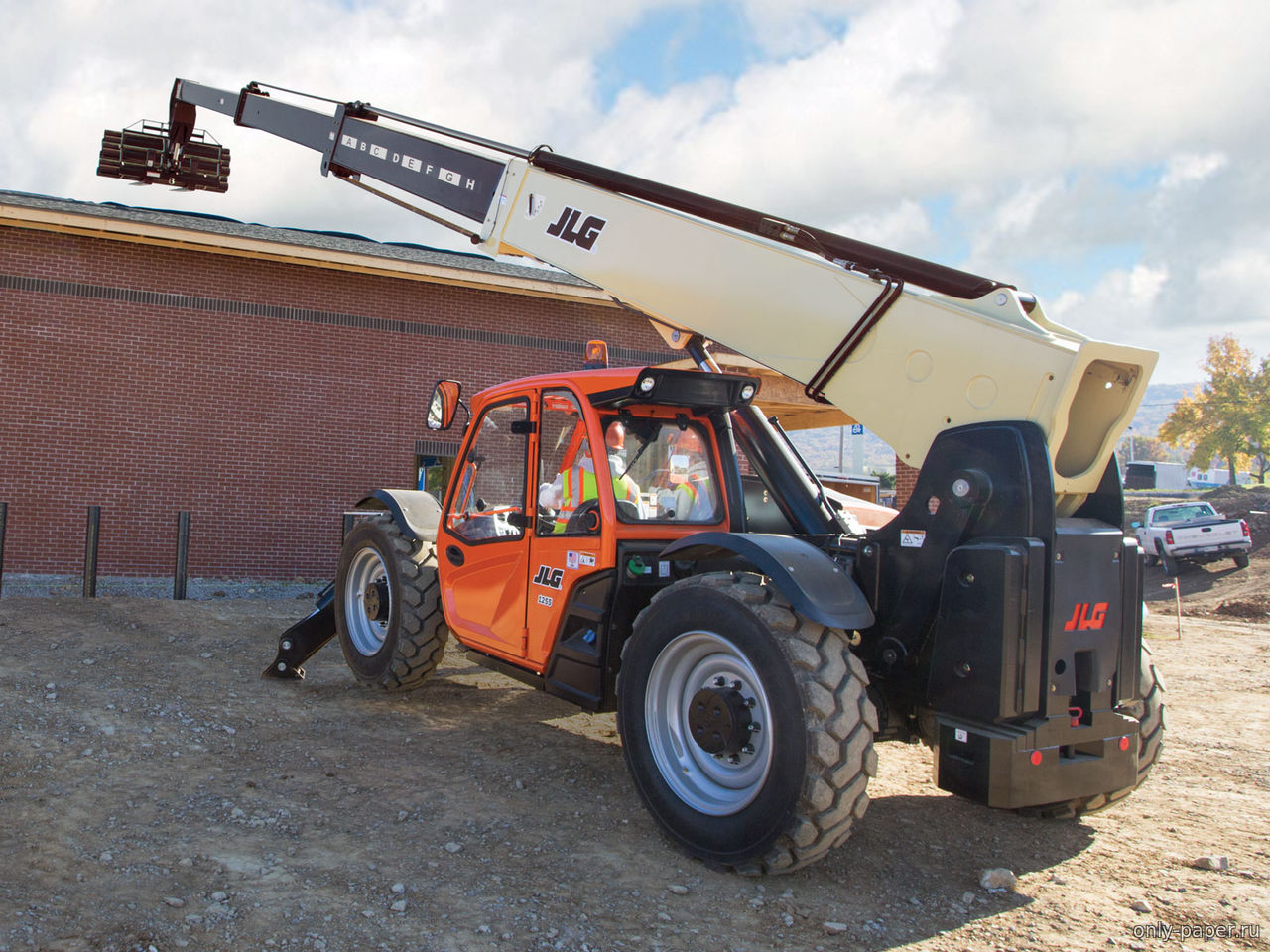
A telehandler forklift, known as a telescopic handler forklift is specialized equipment for material handling which has the strength of a crane and the utility of a forklift. It has an extendable boom that enables operators to reach over obstacles and place loads at heights no ordinary forklift can reach.
In contrast, the telehandler forklift is unmatched when it comes to uneven terrain. This machine can carry heavy loads at construction sites or onto farms where regular forklifts cannot move. It is commonly used for lifting, loading, clearing, or even assisting in lifting people in high-reach places, where the boom can be raised, lowered and extended while supporting attachments like buckets, jibs, or work platforms.
If, for example, you are supervising a multi-story construction site and have to lift steel beams or pallets of bricks to the second floor, a telehandler forklift does the job swiftly and safely. It is especially efficient in muddy or rocky terrain where the operator needs to maintain Work, health and safety procedures.
What are Traditional Forklift Types?
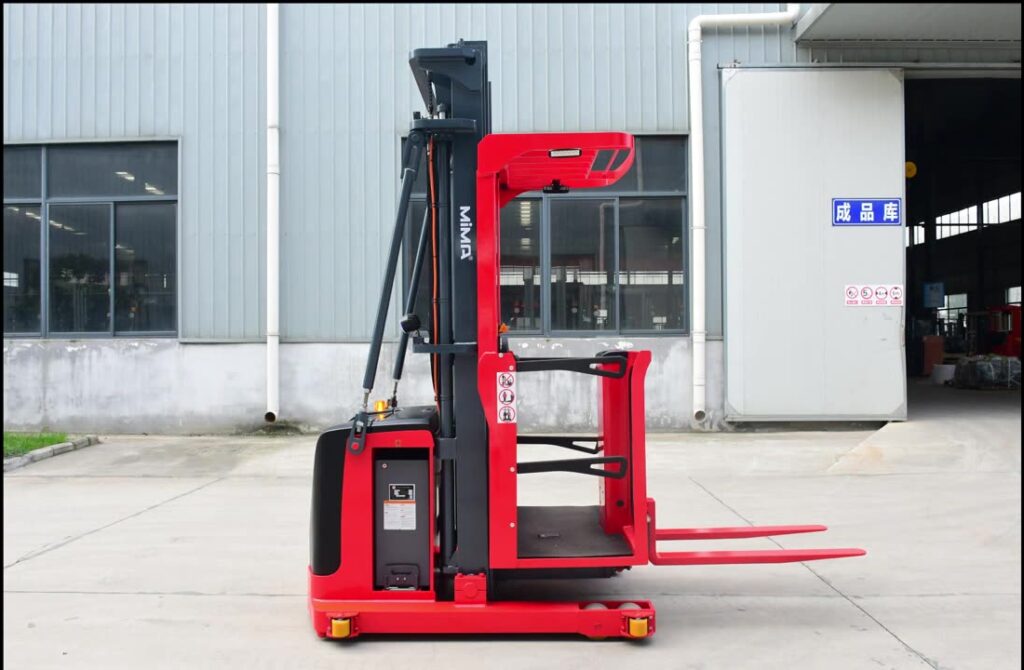
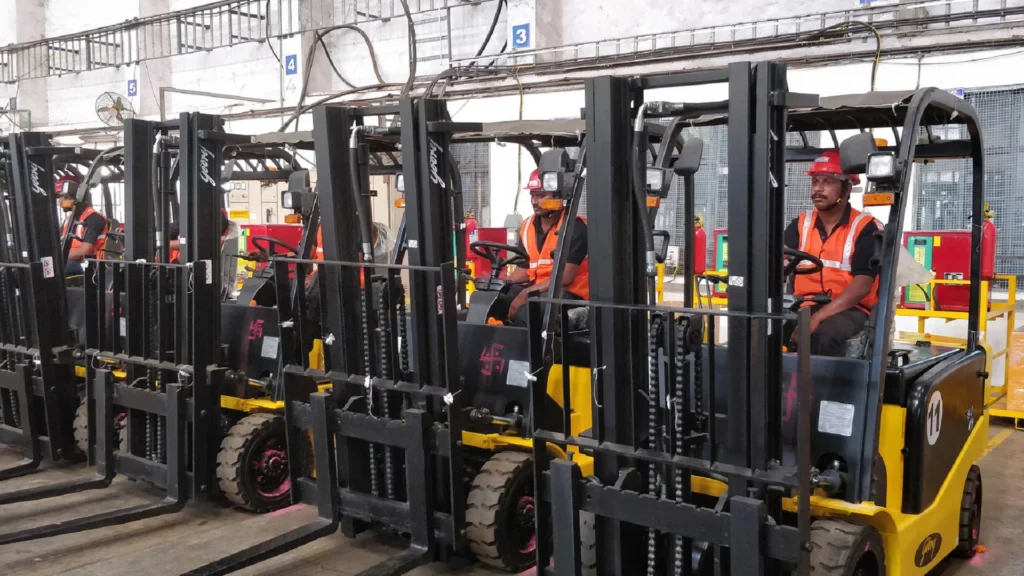
The more commonly used forklifts include the counterbalance forklifts (LPG, diesel or electric powered), narrow-aisle forklifts, pallet jacks and reach trucks. Other types of forklifts include those used for indoor activities such as warehouse work, retail distribution and manufacturing plant work. Traditional types of forklifts come equipped with compact tires and smaller turning radii. The design of these forklifts places emphasis on a compact body which increases maneuverability. Models can carry between 1.5 to 5 tons, making them perfect for repetitive activities like loading skids and pallets. They provide maximum efficiency in operations like racking systems or narrow aisles. Most models can carry between 1.5 to 5 tons and are ideal for repetitive tasks involving pallets and skids.
Telehandler Forklift vs Traditional Forklift: In-Depth Comparison
Reach and Height Performance
The range capability is the most discernable difference. A telehandler forklift, depending on the model, can extend loads to 55 feet and beyond. This is crucial in placing concrete blocks on scaffolding or in high work zones that are accessible without a crane.
Compared with traditional forklifts that provide lift heights of 10 to 20 feet, which is adequate for racking systems, they are unsuitable for high-rise construction or vertical reach work of various overhead obstacles.
Best Places to Use Each Forklift
Telehandler forklifts are designed to operate in the open air and can encounter slopes, mud, gravel and other rough terrain due to their large tires and ground clearance. Telehandlers can be found on construction sites, quarries and large farms as they can go to places that most machines cannot. Conversely, traditional fork-lift types are designed for use in a building and on a single surface. If moved outdoors or to unpaved roads, they are likely to struggle on unstable terrain.
Equipment Versatility
A telehandler’s adaptability is perhaps its greatest strength. By changing attachments, you can convert the telehandler from a palletizer to a crane or a lift. This lowers the number of machines required on-site, saving both time and rental expenses. Conventional forklifts usually support less attachments, typically just side-shifters and clamps. They are important for standardized pallet movements, but not designed for multi-purpose work.
Which Forklift is Best for Indoor Work?
Traditional forklifts are preferred in narrower confined spaces such as small factories or warehouse aisles. They are easy to maneuver in areas with tall racking systems thanks to their compact design and precise controls.With an extended boom and large frame, the telehandler requires more operating room. Telehandlers have a wider turning radius and can be more limited in terms of visibility, particularly in indoor spaces.
Why Forklift Rental is the Smart Business Move
Many businesses in Saudi Arabia prefer renting forklifts rather than purchasing them because it requires less upfront capital and it is more flexible. Renting provides access to the most modern models without purchasing, preserving funds for other important activities. In addition, rental allows for whatever is needed, including a telehandler forklift for a construction project or a compact electric model for inventory work in warehouses. Depending on the project’s duration and complexity, your fleet can be adjusted, all while avoiding the responsibilities that come with ownership. Most importantly, forklift rental from recognized suppliers comes with welder repairs and maintenance for the forklifts while providing continuous support and certified machines—this ensures that the team can focus on the tasks instead of dealing with mechanical issues.
Forklift Maintenance and Repairs: A Critical Consideration
Forklift Maintenance and Repair is crucial for those who own or rent equipment. It is necessary to uphold Forklift Maintenance and Repair standards to avoid operational breakdowns that disrupt productivity, incur safety hazards, or lead to emergency repairs. Our expert team offers all-embracing caring services beyond routine checks of fuel filter changes, battery inspection, and oil serving on material handling equipment performed on clients’ Forklifts. QimamAffan promise exceeds servicing and maintaining machinery—material handling equipment must function seamlessly day after day. Our Forklift Maintenance and Repair services encompass tire and brake inspections and other necessary calibrations. This results in safer operators, reduced legal liabilities relative to operating laws, and less downtime on the Forklift helping keep tight deadlines as highlights.
Forklift Price in KSA: Rent or Buy?
In KSA, the price of a forklift increases or decreases based on its type and qualities. Traditional forklifts cost between SAR 50,000 and SAR 120,000 and are beneficial for indoor work and light to medium lifting while heavy duty telehandler forklifts can lift heavy loads at great heights for outdoor work and cost over SAR 200,000. Special attachments and other features will increase the total cost of the forklift, which will also increase the forklift price in KSA. We offer flexible rental options that are perfect for businesses. You only pay for the days you need, whether it’s a single day, a month, or longer. Rentals also include maintenance and repairs alongside having access to great professional support and latest models which greatly reduces expenses, allowing businesses to easily manage the Forklift Price in KSA.
The Role of a Forklift Operator
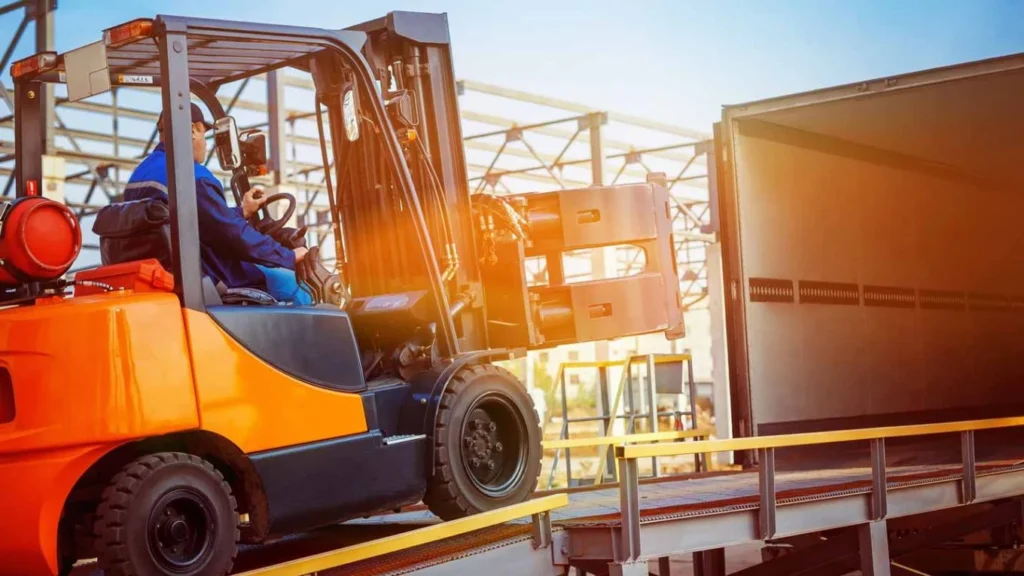
An appropriately qualified and trained forklift operator is equally critical as owning a high-quality piece of equipment. telehandler forklift If an extendable arm is used to lift heavy loads, experience and care are especially needed while using a telehandler forklift. Keeping the load balanced and secure on rough outdoor ground is critical, and rough terrain adds another level of complexity.
A trained operator knows how to keep the load balanced properly, keep the forklift from tipping with carefully coordinated movements, and maintain safe positions with various attachments. With regards to driving traditional forklifts, operators need excellent maneuvering skills in cramped areas, sharp turn navigation, accurate stacking, and driving through narrow aisles without collisions.
In Saudi Arabia, certified forklift operators give businesses peace of mind as they keep operations efficient and safe. Trained operators respect the legal regulations as they guarantee safety for workers, thereby giving businesses the support they need in Saudi. QimamAffan strives to provide clients with trained operators who promote safe and efficient work practices.
Why Choose Qimam Affan for Your Forklift Needs?
When it comes to reliable material handling equipment in Saudi Arabia, QimamAffan is the trusted name for quality, performance, and service. Whether you need a telehandler forklift for tough outdoor tasks or traditional forklift types for indoor warehouse use, we offer flexible rental solutions tailored to your project’s needs and budget. Our fleet includes well-maintained, certified machines backed by expert support, including complete forklift maintenance and repairs, ensuring smooth and safe operations. Worried about the forklift price in KSA? Renting from QimamAffan means no heavy upfront costs — you only pay for what you need. With professional guidance, top-tier equipment, and skilled service, QimamAffan is your dependable partner for efficient forklift rental across Saudi Arabia.
Apart from providing flexible forklift rental options, QimamAffan offers comprehensive forklift repair services in KSA designed to keep your material handling equipment operating at peak efficiency. Our team of skilled technicians specializes in forklift battery repair, ensuring that electric forklifts have reliable power for uninterrupted operation. Whether your forklift battery is losing charge quickly or showing signs of wear, we perform thorough diagnostics and repairs to extend its life and improve performance. Additionally, our expertise in electric forklift repair covers all types of electrical and mechanical issues, helping you avoid unexpected breakdowns that can halt your workflow and cause costly delays.
QimamAffan also provides specialized repair services for major forklift brands, including Cat forklift repair and Doosan forklift repair services. We understand each forklift brand has its own specifications and maintenance needs. Our technicians are trained to handle brand-specific challenges efficiently.
Whether it’s regular servicing or emergency repair, we offer reliable, tailored solutions.
We ensure your forklifts stay safe, functional, and meet Saudi Arabia’s safety standards.
Choosing Qimam Affan means fewer breakdowns and longer forklift life with expert care
Conclusion
Your decision between a telehandler forklift and a traditional forklift will depend largely on the functions of your operations. The telehandler forklift is a more powerful and versatile option if your project entails high-reaching outdoor tasks, or if there is a need to change attachments. On the other hand, traditional forklift types are the best fit for Pallet lifting due to moving heavy pallets indoors to narrow corridors and tight spaces because of their compact design and easy maneuverability. At QimamAffan, we know that every business has a different model which is why we make flexible forklift rental services tailored to various sectors. Our rentals include full forklift maintenance, affordable forklift prices in KSA, and certified operators. Qimam Affan supports businesses in construction, manufacturing, logistics, and warehousing with reliable equipment to boost efficiency and reduce downtime.
Contact Us today to learn how we can support your forklift rental needs and help your business run more efficiently!
1 comment
[…] raise the boom. Unlike material forks, which are designed for horizontal transferring and lifting, a telehandler forklift is capable of not only transferring items horizontally but also vertically. This articulating […]